How Responsible Gambling Help Works in South Africa
Responsible gambling in South Africa is supported by a national system that aims to reduce gambling harm, help people who need treatment, and encourage safer participation in legal gambling. This system works through cooperation between regulators, licensed gambling operators, and an independent non-profit organisation that provides education, research, and treatment services.
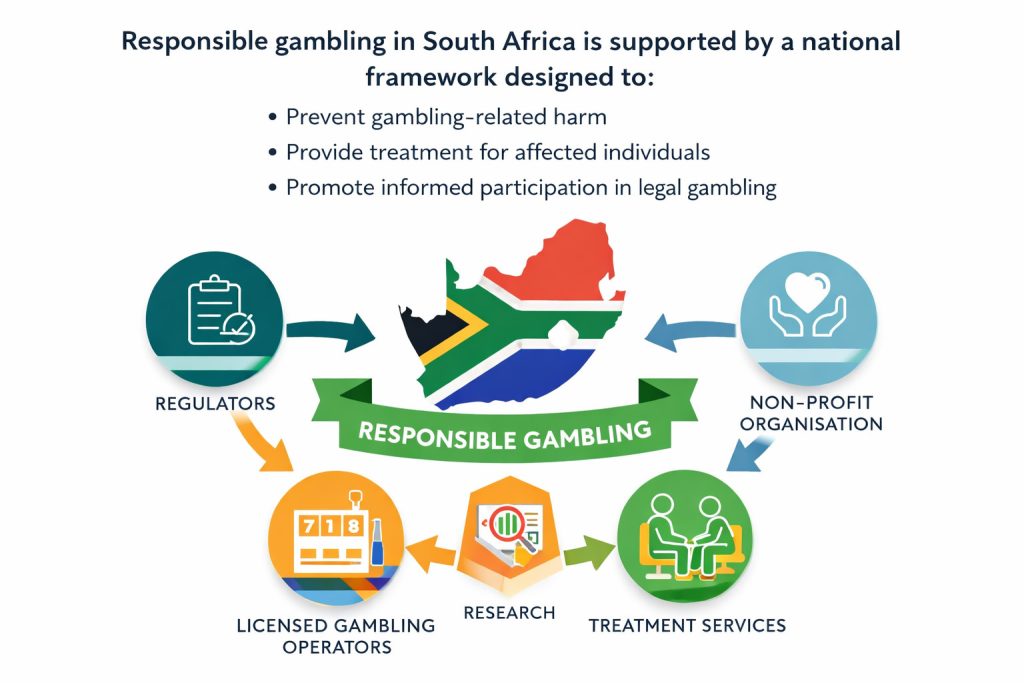
The South African Responsible Gambling Foundation (SARGF) sits at the centre of this system and is responsible for running South Africa’s main responsible gambling initiatives.
What the South African Responsible Gambling Foundation Does
The South African Responsible Gambling Foundation (SARGF) is a non-profit organisation that works to reduce gambling harm. It focuses on preventing problem gambling, providing treatment and counselling, and gathering information that helps guide public awareness and policy decisions.
The Foundation has been operating for about 18 years and has helped more than 18,500 people through counselling and treatment for gambling problems and gambling addiction. These services are available across South Africa and are free to access.
About the National Responsible Gambling Programme (NRGP)
Most of the South African Responsible Gambling Foundation’s work is delivered through the National Responsible Gambling Programme (NRGP). The programme focuses on three key areas that support safer gambling and reduce gambling-related harm nationwide.
- Prevention and education
These efforts focus on helping people understand the risks of gambling before it becomes a problem. The goal is to give clear, practical information so people can spot early warning signs and keep their gambling under control. - Treatment and counselling
Support is available for people who are struggling with gambling problems or gambling addiction. This includes talking to trained professionals through counselling, as well as more structured treatment when needed. Help can be provided on an outpatient basis or through inpatient care for more serious cases. - Research and monitoring
Research is used to understand how gambling habits are changing and to see how well treatment and awareness programmes are working. This helps ensure that responsible gambling support in South Africa stays relevant and effective over time.
Together, these three areas work as a single system to prevent gambling harm, support treatment, and reduce long-term risks linked to gambling problems.
Responsible Gambling Foundation (SARGF) Funding & Oversight
The South African Responsible Gambling Foundation (SARGF) is funded by licensed gambling operators in South Africa, excluding the National Lottery. These operators contribute 0.1 percent of their Gross Gambling Revenue (GGR), which is calculated after winnings are paid to players. This funding allows the Foundation to work independently and keep its treatment and education services free for the public.
The Foundation also carries out specific projects when asked to do so by provincial gambling boards. As a non-profit organisation with limited resources, it focuses its funding on essential services that provide the greatest public benefit.
Role of Licensed Gambling Operators in Responsible Gambling
Licensed gambling operators support responsible gambling in more ways than just funding. They share responsible gambling messages through advertising, signage at betting venues, and online communication. Information materials are also displayed at licensed locations to help players understand where to get support and encourage them to seek help early.
Staff working at gambling venues are trained to spot signs of problem gambling or excessive gambling. They are taught how to respond appropriately and guide individuals toward professional support services when concerns arise. This helps identify gambling issues early and reduces the risk of further harm.
What Problem Gambling Looks Like
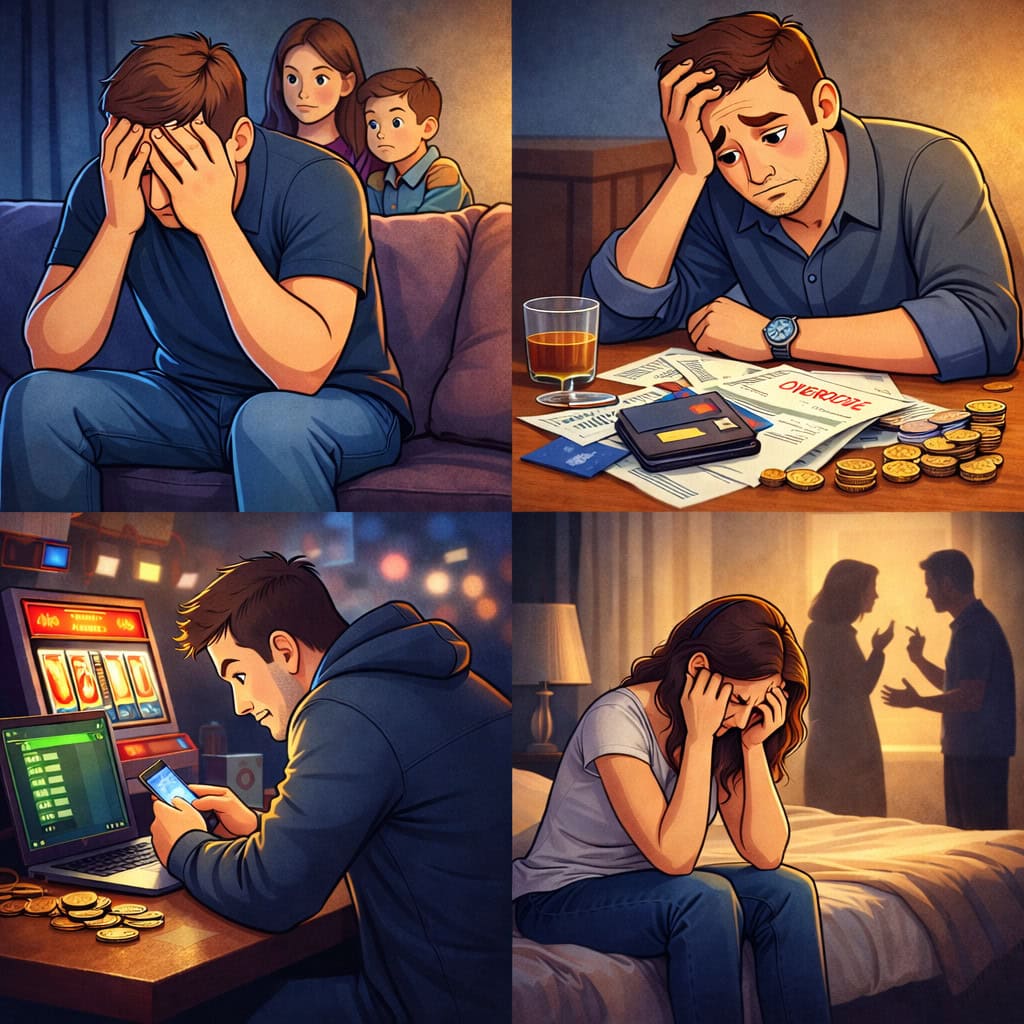
Problem gambling happens when someone keeps gambling even though it is causing harm to their finances, relationships, or emotional wellbeing. It is not about how often a person gambles, but about losing control and continuing despite the negative impact.
Common warning signs can include pulling away from family or friends, borrowing money often, feeling anxious or easily upset, spending too much time gambling, or feeling hopeless. These signs are often noticed by people close to the individual before they seek help themselves.
Treatment Framework and Recovery of Gambling Problems
All services offered through the South African Responsible Gambling Foundation (SARGF) and the National Responsible Gambling Programme (NRGP) are provided free of charge and are available 24 hours a day. Support includes confidential telephone counselling, structured outpatient treatment, and inpatient care for severe or chronic gambling addiction.
- Outpatient treatment generally involves a series of face-to-face counselling sessions delivered by qualified professionals and aligned with recognised health-care standards.
- Inpatient treatment may involve a structured stay in a hospital or clinic environment, with ongoing monitoring by psychologists, psychiatrists, and clinicians.
Recovery from gambling addiction is recognised as a long-term process. Relapse may occur and is regarded as part of recovery rather than treatment failure. Relapse-prevention support is included as part of ongoing care.
Gambling Activities Most Commonly Associated With Harm
Peer-reviewed academic research published in 2024 found that people who use slot machines are more likely to be at risk of problem gambling compared to those who take part in other gambling activities. Studies published through ScienceDirect also consistently show that electronic gaming machines, including slot machines, are among the gambling products most strongly linked to harmful gambling behaviour.
Public Awareness and Illegal Gambling
Responsible gambling efforts in South Africa also focus on the dangers of illegal and unlicensed gambling. Some people who seek help report gambling on sites or with operators that are not legally regulated, where there are no proper protections for players and no access to support if something goes wrong.
Public awareness campaigns are used to warn people about these risks. These campaigns are run together with the National Gambling Board (NGB) and provincial gambling boards, helping to give clear and consistent information to the public about safe and legal gambling.
Gambling Behaviour in the South African Population
Research shows that gambling behaviour in South Africa varies widely, with people falling into different participation groups. While gambling is a common activity, most adults either do not gamble at all or gamble recreationally within reasonable limits. Gambling-related harm is largely concentrated among a smaller portion of the population.
While the most comprehensive national prevalence studies were conducted in the mid-2000s and early-2010s, their findings continue to be referenced by regulators and researchers to understand long-term gambling behaviour patterns in South Africa.
National prevalence research conducted under the National Responsible Gambling Programme (NRGP), together with peer-reviewed academic studies, provides a consistent picture of how gambling participation and gambling problems are distributed across the population.
Key findings from South African prevalence research include:
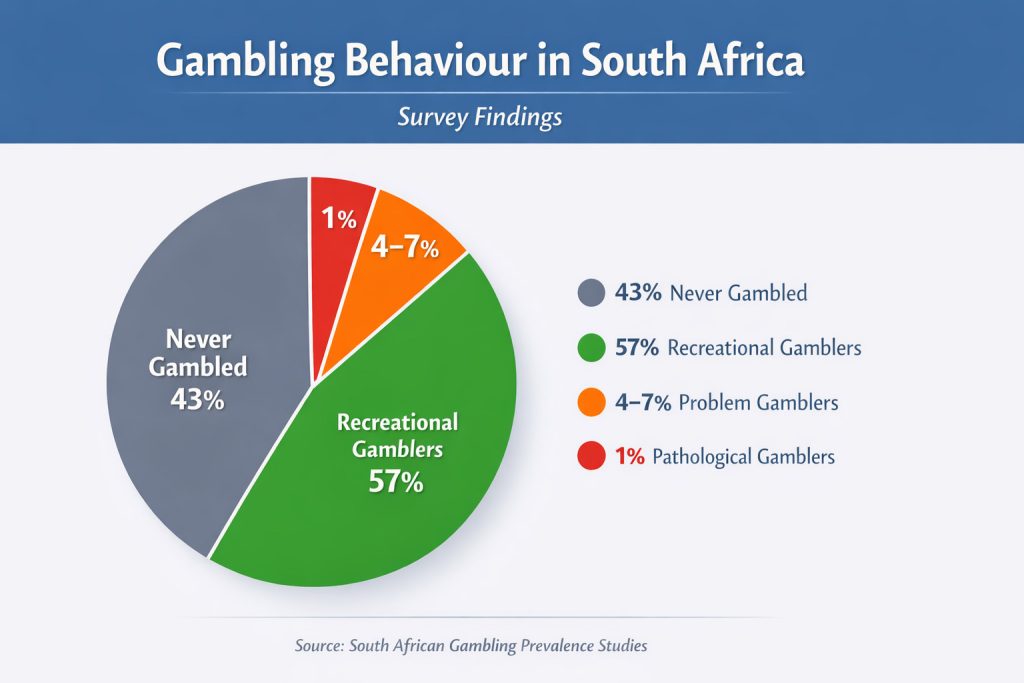
- Around 57% of adults have taken part in some form of legal gambling
(based on nationally representative survey research, mid-2000s) - Approximately 43% of adults report that they have never gambled
(National Urban Prevalence Study, NRGP) - An estimated 4–7% of adults experience problem gambling
(ranges reported across national and academic prevalence studies) - About 1% of adults meet clinical criteria for pathological or compulsive gambling
(peer-reviewed national survey data)
These patterns are supported by multiple NRGP prevalence studies conducted over time, which track gambling participation and problem gambling levels across South Africa. The NRGP research publications can be accessed here:
https://www.nrgp-gambling-handbook.co.za/research.htm
Additional peer-reviewed research based on nationally representative survey data also confirms that gambling addiction affects a relatively small proportion of the adult population, with pathological gambling representing an even smaller group. One such study is available via PubMed Central:
https://pmc.ncbi.nlm.nih.gov/articles/PMC4189313/
Taken together, these findings show that while gambling is widely accessible in South Africa, most people either do not gamble or gamble responsibly. Gambling-related harm is concentrated among a smaller, more vulnerable group, highlighting the importance of targeted prevention, early intervention, and access to treatment support.
Accessing Gambling Support Services
If you are worried about your own gambling, or about someone close to you, help is available. The South African Responsible Gambling Foundation (SARGF) offers a free and confidential helpline on 0800 006 008, available 24 hours a day. Getting help early can make a big difference and reduce long-term harm.
How Responsible Gambling Help Works in South Africa: FAQs
Clear answers based on the responsible gambling system, support services, and research points described in this page.
What is the responsible gambling framework in South Africa?
South Africa uses a national system to reduce gambling harm, help people who need treatment, and encourage safer participation in legal gambling. The system works through cooperation between regulators, licensed gambling operators, and an independent non-profit organisation that provides education, research, and treatment services.
What does the South African Responsible Gambling Foundation (SARGF) do?
The South African Responsible Gambling Foundation (SARGF) is a non-profit organisation that works to reduce gambling harm. It focuses on preventing problem gambling, providing treatment and counselling, and gathering information that helps guide public awareness and policy decisions.
The Foundation has been operating for about 18 years and has helped more than 18,500 people through counselling and treatment for gambling problems and gambling addiction. These services are available across South Africa and are free to access.
What is the National Responsible Gambling Programme (NRGP)?
Most of the South African Responsible Gambling Foundation’s work is delivered through the National Responsible Gambling Programme (NRGP). The programme focuses on three key areas that support safer gambling and reduce gambling-related harm nationwide.
What are the three main areas of the NRGP?
1) Prevention and education: Helps people understand gambling risks early, spot warning signs, and keep gambling under control.
2) Treatment and counselling: Support for people struggling with gambling problems or gambling addiction, including counselling and more structured treatment when needed.
3) Research and monitoring: Tracks changes in gambling habits and checks how well awareness and treatment programmes are working, helping support stay relevant over time.
Together, these three areas work as a single system to prevent gambling harm, support treatment, and reduce long-term risks linked to gambling problems.
How is the SARGF funded?
The South African Responsible Gambling Foundation (SARGF) is funded by licensed gambling operators in South Africa, excluding the National Lottery. These operators contribute 0.1 percent of their Gross Gambling Revenue (GGR), which is calculated after winnings are paid to players.
This funding allows the Foundation to work independently and keep its treatment and education services free for the public. The Foundation also carries out specific projects when asked to do so by provincial gambling boards.
How do licensed gambling operators support responsible gambling?
Licensed gambling operators support responsible gambling in more ways than just funding. They share responsible gambling messages through advertising, signage at betting venues, and online communication. Information materials are displayed at licensed locations to help players understand where to get support and encourage them to seek help early.
Staff working at gambling venues are trained to spot signs of problem gambling or excessive gambling. They are taught how to respond appropriately and guide individuals toward professional support services when concerns arise.
What does problem gambling look like?
Problem gambling happens when someone keeps gambling even though it is causing harm to their finances, relationships, or emotional wellbeing. It is not about how often a person gambles, but about losing control and continuing despite the negative impact.
Warning signs can include pulling away from family or friends, borrowing money often, feeling anxious or easily upset, spending too much time gambling, or feeling hopeless.
What treatment and support is available through SARGF and NRGP?
All services offered through the South African Responsible Gambling Foundation (SARGF) and the National Responsible Gambling Programme (NRGP) are free and available 24 hours a day.
Support includes confidential telephone counselling, structured outpatient treatment, and inpatient care for severe or chronic gambling addiction.
Why are slot machines often linked to gambling harm?
Peer-reviewed academic research published in 2024 found that people who use slot machines are more likely to be at risk of problem gambling compared to those who take part in other gambling activities. Studies published through ScienceDirect also show that electronic gaming machines, including slot machines, are among the gambling products most strongly linked to harmful gambling behaviour.
How does responsible gambling work address illegal and unlicensed gambling?
Responsible gambling efforts in South Africa also focus on the dangers of illegal and unlicensed gambling. Some people who seek help report gambling on sites or with operators that are not legally regulated, where there are no proper protections for players and no access to support if something goes wrong.
Public awareness campaigns warn people about these risks. These campaigns are run together with the National Gambling Board (NGB) and provincial gambling boards.
What do the prevalence studies say about gambling behaviour in South Africa?
Research shows that gambling behaviour in South Africa varies widely. While gambling is common, most adults either do not gamble at all or gamble recreationally within reasonable limits. Gambling-related harm is concentrated among a smaller portion of the population.
The most comprehensive national prevalence studies were conducted in the mid-2000s and early-2010s, and their findings are still referenced by regulators and researchers to understand long-term gambling patterns.
- Around 57% of adults have taken part in some form of legal gambling (mid-2000s national survey research)
- Approximately 43% of adults report they have never gambled (National Urban Prevalence Study, NRGP)
- An estimated 4–7% of adults experience problem gambling (ranges across studies)
- About 1% meet clinical criteria for pathological or compulsive gambling (peer-reviewed national survey data)
NRGP research publications: View NRGP research
Peer-reviewed study example: View on PubMed Central
Where can I get help if I am worried about gambling?
If you are worried about your own gambling, or about someone close to you, help is available. The South African Responsible Gambling Foundation (SARGF) offers a free and confidential helpline on 0800 006 008, available 24 hours a day. Getting help early can make a big difference and reduce long-term harm.
HOW RESPONSIBLE GAMBLING HELP WORKS