
Fake Betting Site Scams in South Africa: Why You Should Never Deposit to Withdraw
A bettor recently contacted Betline after depositing R800 on what they believed was a licensed South African betting site. Their balance showed winnings, but when they tried to withdraw, the site told them they needed to deposit another R1200 to upgrade to “VIP3” before the payout would process.
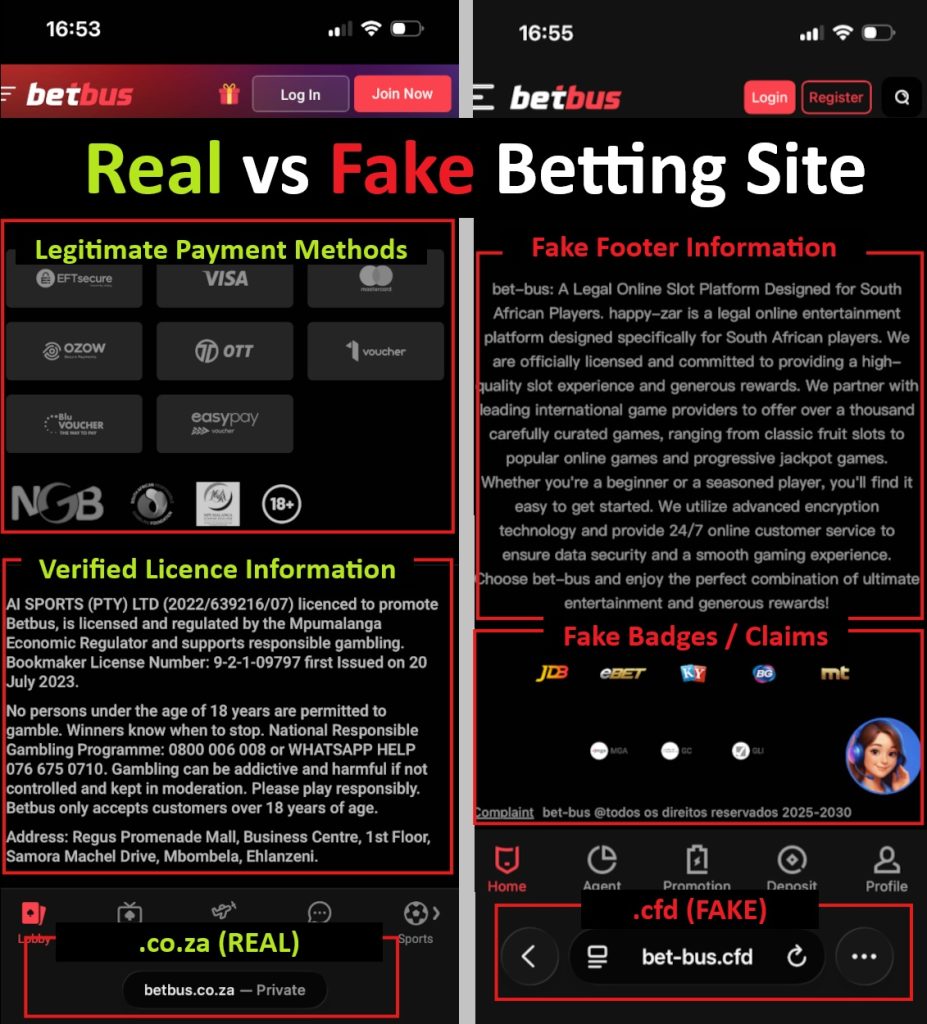
When asked to send the full URL, the problem became obvious. They were not on the site they thought they were on. Scammers had cloned a legitimate South African betting site, using a lookalike domain ending in .cfd. The bettor had found the link through a TikTok ad. The legitimate operator in this case was Betbus, which operates on betbus.co.za under AI Sports (Pty) Ltd (Registration No: 2022/639216/07), licensed and regulated by the Mpumalanga Economic Regulator under Bookmaker Licence Number 9-2-1-09797. The fake site had none of this. It borrowed the branding, changed the domain, and built a trap around it.
Fake betting sites in South Africa are becoming more common, and this type of scam is not isolated. Betting site scams in South Africa follow a pattern that has cost bettors thousands of rands, and they continue to catch people because the fake sites look convincing enough to pass a quick glance.
Here is how the scam works, how to spot it, and what to do after falling into it.
How the Fake Betting Site Scam Works
The setup follows a predictable pattern. A short video on TikTok or a sponsored post on Facebook promises quick wins or a free signup bonus. The link redirects through tracking domains and lands on a site that looks nearly identical to a well-known South African betting site.
Once the bettor signs up and makes a first deposit, the site shows healthy winnings. The problem starts at the withdrawal step. They are told they must upgrade their account tier, pay a release fee, or correct a “bank account mismatch” by depositing more money. If they pay, the goalposts move again. A new tier, a new fee, a new excuse. The cycle continues until they stop paying, at which point support goes silent.
This is not a betting issue. It is a classic advance-fee scam using betting language. The fake site has no real licence, no real balance, and no intention of ever paying anyone out.
🎁 Claim Your Welcome Betting Bonus Today
Explore our tailored list of the best betting bonuses in South Africa. Find a verified local site to bet on and start with extra value right now.
View Bonuses & Bet Safely →Why Fake Betting Site Scams Are So Hard to Spot
Clone betting sites work because they exploit three things at once.
The first is brand trust. By copying the look and name of a licensed South African operator, the scam piggybacks on years of legitimate marketing done by the real brand. Most bettors do not check the URL carefully, especially on mobile where the address bar is small and often hidden.
The second is paid social media distribution. TikTok and Facebook ads allow scammers to target South African users by location and interest. The redirect chain usually passes through tracking domains designed to make the final URL look random and technical, so nothing stands out as obviously wrong.
The third is urgency. By the time a bettor sees a problem, they are already emotionally invested in recovering what feels like their winnings. That psychological pressure is exactly what keeps people depositing.
Red Flags That Should Stop You Immediately
Any one of the following is reason enough to walk away. If more than one applies, the site is almost certainly a scam.
The domain uses an unusual or disposable extension. Licensed South African betting sites typically operate on established domains like .co.za, .com, .net, or .bet. Extensions like .cfd, .top, .cyou, or .fun are cheap, disposable, and commonly used by scam operations because they can be registered anonymously and abandoned without consequence. A South African betting site running on one of these extensions is a strong indicator of a fake.
The site requires a deposit to process a withdrawal. No licensed South African betting site will ever require a further deposit to release a withdrawal. Legitimate delays come from FICA verification, which requires documents, not cash.
There is no South African licence number in the footer. Every legal betting site in the country holds a provincial gambling board licence and displays the number openly. No number, no licence, no trust. For comparison, the real Betbus displays its Mpumalanga Economic Regulator licence (9-2-1-09797) and company registration (2022/639216/07) in its footer. A clone site will never have verifiable details like these.
The site only accepts hard-to-reverse payment methods. Scam platforms often lean on voucher deposits and nothing else, because those are harder to trace and impossible to reverse once processed.
How to Verify Any Betting Site Before Depositing
Checking a site takes less than two minutes and can save thousands of rands.
Confirm the exact URL. Type the betting site’s name into Google, skip sponsored results, and go to the top organic listing. Compare that domain character by character to the one in the browser. If they do not match exactly, close the tab.
Check the licence. The National Gambling Board publishes a register of licensed operators, and each provincial gambling board maintains its own records. A legitimate betting site will show its licence number in the footer. If that number does not appear on the relevant regulator’s records, the site is not a licensed operator.
Check the company registration. Every licensed South African betting site is operated by a registered company. That registration number should be visible on the site and verifiable through the CIPC. If no company information is displayed, or if the details do not match CIPC records, the site should not be trusted.
Run the site through BetWatch. BetWatch is Betline’s free licence verification tool, built for exactly this kind of situation, when a link looks plausible but something feels off. It sits alongside the NGB’s official records as an additional layer of verification.
What to Do After Being Scammed
If money has already been deposited into a fake site, the reality is that recovering it is difficult, especially when payment was made by voucher or instant EFT to an unknown beneficiary. That said, there are steps worth taking immediately.
Stop depositing. Not one more rand, regardless of what the site promises. The “next deposit” will not unlock the withdrawal. It never does.
Contact the bank. If the deposit went through a card or EFT, report it as a fraudulent transaction as soon as possible. The sooner the report is made, the better the chance of a reversal, though success is not guaranteed.
Save the evidence. Screenshot the site, the conversation with support, the social media post that led to the site, and the payment confirmation. All of this is needed if the scam is reported formally.
Report the ad or post. Flag the post or video on the platform where it appeared so the takedown process can begin. The real operator whose brand is being impersonated should also be alerted, as licensed betting sites often work with regulators and hosting providers to get clone domains taken down.
Warn others. A single Facebook post or WhatsApp message can stop five more people from losing their money. These scams spread because they move faster than the takedowns, and community awareness is one of the few things that keeps pace.
The Bottom Line
The “deposit more to withdraw” scam is one of the most common traps targeting South African bettors, and it continues to evolve. The fake sites look more professional than ever, cloning real licensed brands on lookalike domains and pushing them through paid social media ads.
The defence stays simple. Check the URL. Check the licence. Check the company registration. Never deposit to withdraw. And if a social media ad is doing the hard selling, assume the viewer is the product, not the customer.
Anyone uncertain about a betting site can verify the licence before depositing a cent. Five minutes of checking beats losing money to a scam that was avoidable from the start.
Fake betting site scams South Africa FAQs
Clear answers about fake betting site scams in South Africa, how to spot the warning signs, and what bettors should do before depositing money online.
How do I know if a betting site is legitimate in South Africa?
Why is a betting site asking me to deposit money to withdraw?
What is a clone betting site?
What domain extensions do fake betting sites use?
Can I get my money back after depositing on a fake betting site?
How do scammers promote fake betting sites?
Where can I report a fake betting site in South Africa?
How can I check if a betting site is licensed before I deposit?
FAKE BETTING SITE SCAMS IN SOUTH AFRICA
This article forms part of the Betline Licensing and Legal series and explains how fake betting site scams in South Africa work.
It shows how to spot red flags, avoid common traps, and how bettors can verify if a betting site is locally licensed before depositing.