
Where Gambling Revenue Goes in South Africa: Public Services and Responsible Gambling
Every bet placed at a licensed betting site in South Africa feeds into a regulated system that supports public services, community projects, and responsible gambling programmes. The money that does not return to players as winnings does not simply disappear into private profit. Part of it becomes provincial tax that funds public services. Another portion supports community development projects built into operator licence conditions. A smaller share funds responsible gambling programmes, while a portion covers the cost of regulation.
This article explains, in plain terms, where gambling revenue goes in South Africa. It draws on official figures published by the National Gambling Board (NGB), provincial licensing authorities, the National Treasury, Statistics South Africa, and the South African Responsible Gambling Foundation (SARGF).
The Scale of the South African Gambling Industry
According to the National Gambling Board, the industry recorded R1.5 trillion in total turnover during the 2024/25 financial year, a 31.3% increase from R1.1 trillion the previous year.1
Turnover is not the same as profit. Most of that money is paid back to players as winnings and then wagered again. The figure that matters for tax and public funding is Gross Gambling Revenue (GGR), which is turnover minus winnings paid out. In 2024/25, GGR reached R74.5 billion, a 25.6% year-on-year increase.1
The breakdown by gambling mode, as reported by the NGB, was as follows:
- Betting (sports betting and horse racing) generated about 70% of GGR at R52.3 billion2
- Casinos generated R16.6 billion, roughly 22% of the total2
- Limited Payout Machines (LPMs) contributed R4.1 billion2
- Bingo contributed R1.7 billion2
Taxes and levies collected from the industry in 2024/25 amounted to R5.8 billion, with the betting sector accounting for 59% of that share at R3.4 billion.3 In earlier years the figure was lower. The NGB’s audited statistics for 2023/24 recorded R4.8 billion in taxes and levies, and FY2022/23 recorded R4.0 billion.4 5
But tax is only one channel through which gambling money re-enters the economy. Licensed operators also make direct community contributions, fund the national responsible gambling programme, and carry the regulatory costs of a three-tier oversight system. Each channel is covered in turn below.
Who Regulates Gambling and Collects the Money?
South Africa’s gambling sector is regulated through a three-tier governance structure, as described by Statistics South Africa.6 The Department of Trade, Industry and Competition (dtic) sets national gambling policies and standards. The National Gambling Board oversees compliance, advises on policy, and conducts research into the socio-economic impact of gambling. The nine Provincial Licensing Authorities (PLAs) issue licences, monitor compliance, enforce regulations, and collect taxes on behalf of their provincial governments.
The National Gambling Board is established in terms of the National Gambling Act 7 of 2004 and is registered as a Schedule 3A Public Entity under the Public Finance Management Act.7 The nine provincial gambling boards are classified as extra-budgetary accounts (EBAs), which means their finances are audited publicly but sit outside the core parliamentary appropriation process.6
Gambling is a concurrent legislative competence under the Constitution, which means both national and provincial governments have lawmaking powers in this area. The practical result is that provincial boards license casinos, bookmakers, bingo halls, and LPM operators, collect the taxes attached to each licence category, and impose community development obligations through the licence conditions themselves.
Channel One: Provincial Taxes Flowing Into Public Funding
The largest channel by value is the tax and levy system. Provincial gambling boards do not keep the taxes they collect. They collect on behalf of the provincial government, and the money flows into the Provincial Revenue Fund of that province.
The legal basis for this is Section 226 of the Constitution, which establishes a Provincial Revenue Fund for each province into which all money received by the provincial government must be paid, with limited exceptions set out in legislation.8 Withdrawals from a Provincial Revenue Fund can only be made in terms of an appropriation by a provincial Act, or as a direct charge authorised by the Constitution or a provincial Act.8
In practice, gambling taxes collected by a provincial board become part of the same pot of money that funds provincial services such as education, healthcare, roads, and social infrastructure. Statistics South Africa confirmed that in 2022/23, provincial governments received R4 billion in gambling and betting taxes from various sources, recorded in provincial government financial statistics rather than in the gambling boards’ own accounts.6
The Western Cape Gambling and Racing Board offers a clear example of scale. According to its annual report, the Board collected taxes and levies for the Western Cape Provincial Fiscus in excess of R1 billion for FY2022/23 for the first time in its history.9 The Board’s own annual performance plan for 2024/25 notes that over the preceding five fiscal years, it collected R3.559 billion in taxes and levies on behalf of the Western Cape Government.10
The same principle applies across all nine provinces. Gauteng, which generates the largest share of casino GGR in the country, channels its collections into the Gauteng Provincial Revenue Fund. The Gauteng Gambling Board retains a portion of gambling taxes as a collection commission, which is how it funds its regulatory operations.6 KwaZulu-Natal, Mpumalanga, and the other provincial boards follow the same model, tailored to each province’s licensing legislation.
Once gambling levies enter a Provincial Revenue Fund, they are no longer identifiable as “gambling money.” They become part of general provincial revenue, allocated through the annual provincial budget process. National Treasury has been explicit about this treatment. In public comments during the 2025 consultation on a proposed national online gambling tax, the Deputy Director General for Tax and Financial Sector Policy at National Treasury, Christopher Axelson, confirmed that the proposed national tax would not be ring-fenced but deposited directly into the national revenue pool.11 The same principle currently applies to provincial gambling levies.
This is why gambling revenue, even though it runs into billions of rand each year, is not directly labelled on any school, clinic, or road project. It funds public services alongside income tax, VAT, and other revenue streams, and is appropriated by provincial legislatures through the annual budget cycle.
Channel Two: Direct Community Contributions Through Licence Conditions
Unlike taxes, which enter the general fiscus and lose their gambling identity, a second channel of gambling money goes straight to communities without passing through the provincial budget. Licensed operators are required to make Corporate Social Investment (CSI) contributions as part of their licence conditions.
The Western Cape Gambling and Racing Board described this mechanism in a briefing to the Western Cape Standing Committee on Finance, Economic Opportunities and Tourism. When applicants submit licence proposals, their CSI commitments are evaluated as part of the application, and once a licence is granted, those commitments are written into the licence conditions themselves.12 Projects typically support previously disadvantaged individuals, community trusts in areas surrounding gambling venues, and youth development initiatives.12
The Western Cape data, tabled in the same briefing, shows how this has played out over time. Casino CSI contributions amounted to R9.3 million in the first five years of licensed operation. That figure rose to R71 million between 2006 and 2010 once all five Western Cape casinos were operational, with Golden Valley in Worcester being the last to open. Contributions totalled R68 million between 2011 and 2015. From 2016 to 2020 the figure was R88 million. From 2021 to 2023, casinos in the Western Cape contributed a further R27 million to community projects.12
In one notable case from the original licensing round, the successful applicant for the Cape Town metro casino licence was obligated under its licence conditions to contribute R135 million, which was allocated to the establishment of the Cape Town International Convention Centre and to youth academic development.12 When an existing licensee requests an expansion, such as additional slot machines or tables, further CSI contributions are imposed as part of the approval.12
The provincial board does not prescribe the specific CSI projects. It leaves the choice to applicants during the competitive bidding process, then reviews actual spend, visits grantees to assess project effectiveness, and pushes for sustainable long-term support rather than once-off payments.9 12
The Western Cape figures above cover casinos specifically. Similar licence-condition CSI obligations apply across provinces and across gambling modes, though the structure and amounts vary by province and by the size of the licence.
Channel Three: The National Responsible Gambling Programme
The third channel is a small but specifically earmarked share of industry revenue that funds the South African Responsible Gambling Foundation (SARGF) and its flagship initiative, the National Responsible Gambling Programme (NRGP).
The SARGF is a public-private partnership between the National Gambling Board, the Provincial Licensing Authorities, and the licensed gambling industry.13 It was launched in June 2000 and incorporated in 2004 as a dedicated response to the harm that can come with legalised gambling.14
According to the SARGF, funding comes from contributions made by licensed gambling operators (excluding the National Lottery), pegged at 0.1% of the industry’s Gross Gambling Revenue.15 In the 2023/24 financial year, the Foundation collected approximately R41 million through this mechanism, against a projected figure of over R50 million based on reported GGR.16 For the 12-month period ending 31 March 2023, Western Cape casinos alone contributed R2.6 million to the SARGF under this 0.1% requirement, on top of their separate licence-linked CSI contributions.12
The NRGP integrates three core services.13 The first is prevention, through public awareness campaigns, school-level education (including the Foundation’s “Taking Risks Wisely” programme linked to mathematics lessons in the school curriculum12), and training for gambling operator staff. The second is treatment, delivered through a national network of trained counsellors, psychologists, and psychiatrists who provide confidential help through a toll-free line and follow-up care. The third is research, which funds prevalence studies and socio-economic research to inform public policy.
This is the programme behind the slogan “Winners know when to stop,” which appears on licensed gambling advertising in South Africa as a regulatory requirement.15 The toll-free counselling line is 0800 006 008, and it operates 24 hours a day.
Self-Exclusion and Harm Reduction
Beyond funding, the regulatory system provides a direct harm reduction tool called self-exclusion. According to the National Gambling Board, a person who recognises that their gambling is becoming a problem can request to be excluded from gambling activities.17 The request is submitted through the gambling operator’s security department, and the forms are then lodged with the Provincial Licensing Authority and the National Gambling Board for record keeping.17
Self-exclusion is free, confidential, and legally enforceable. Once registered, the person is prevented from accessing licensed gambling premises and licensed online betting sites for the period they have elected. During that period, the SARGF’s NRGP provides counselling and, where needed, treatment funded by the 0.1% operator contribution described above.
The Proposed National Online Gambling Tax
The current distribution model may change in the near future. In late 2025, National Treasury published a discussion paper titled “The Case For a National Online Gambling Tax,” proposing a 20% national tax on the gross gambling revenue of online and interactive gambling.11 This would be in addition to the existing provincial taxes of between 6% and 9% on GGR and the existing 0.1% SARGF contribution.
Treasury estimated the new tax could raise more than R10 billion in additional revenue, but stated that the main purpose of the reform was to discourage problem and pathological gambling and the social harm associated with it.11 The tax, as proposed, would not be ring-fenced for responsible gambling services, licence-linked community projects, or harm reduction programmes. It would flow into the national revenue pool.11
The proposal is currently in consultation and has not yet been enacted. If implemented, it would represent the first national-level tax on gambling revenue in South Africa outside the National Lottery, and it would sit alongside, rather than replace, the existing provincial tax system, CSI obligations, and SARGF contributions.
What This Means for Bettors
For a bettor placing a legal wager through a provincially licensed betting site, the financial chain looks like this. The amount staked that is not returned in winnings becomes part of that betting site’s GGR. From that GGR:
- A provincial tax (between 6% and 9% depending on the province and gambling mode) is paid to the provincial gambling board and flows into the Provincial Revenue Fund to fund public services.
- 0.1% is paid to the SARGF to fund the National Responsible Gambling Programme.
- A further share, set by the operator’s licence conditions, goes directly to community development projects, trusts, and youth initiatives nominated in the licence.
- VAT of 15% on GGR is payable to the South African Revenue Service.
- The remainder covers the betting site’s operating costs and profit.
Betting with a licensed South African site is the only way to ensure that this chain operates. Bets placed with offshore or unlicensed sites do not contribute to provincial revenue, do not trigger any licence-linked CSI contribution, do not fund the NRGP, and are not covered by the consumer protections built into the provincial licensing regime.
To confirm that a betting site holds a valid South African licence, bettors can use the Betline verification tool, consult the verified operators list published by the National Gambling Board, or check the operator directories maintained by the nine Provincial Licensing Authorities.
Where gambling revenue goes in South Africa FAQs
Clear answers about gambling revenue, taxes, levies, public funding, community contributions, and responsible gambling programmes in South Africa.
How much money does the South African gambling industry generate each year?
Who collects gambling taxes in South Africa?
Where does gambling tax money go in South Africa?
Does any gambling money go directly to communities?
Is gambling revenue ring-fenced for responsible gambling programmes?
How is the National Responsible Gambling Programme funded?
What is the proposed national online gambling tax?
References
- National Gambling Board of South Africa. National Gambling Statistics, Financial Year Ending 31 March 2025. Available at: https://www.ngb.org.za/wp-content/uploads/2025/10/National-Gambling-Statistics-Financial-Year-Ending-31-March-2025-09-October-2025-1.pdf (index of all reports at https://www.ngb.org.za/industry-performance/national-statistics/).
- National Gambling Board of South Africa. National Gambling Statistics, Financial Year Ending 31 March 2025. GGR breakdown by gambling mode. Available at: https://www.ngb.org.za/industry-performance/national-statistics/
- National Gambling Board of South Africa. National Gambling Statistics, Financial Year Ending 31 March 2025. Taxes and levies data. Available at: https://www.ngb.org.za/industry-performance/national-statistics/
- National Gambling Board of South Africa. National Gambling Statistics, Financial Year Ending 31 March 2024 (Audited). Available at: https://www.ngb.org.za/wp-content/uploads/2024/11/National-Gambling-Statistics-Financial-Year-Ending-31-March-2024-Audited.pdf
- National Gambling Board of South Africa. Summary: Gambling Sector Performance FY2022/23. Available at: https://www.ngb.org.za/wp-content/uploads/2024/09/Summary-Gambling-Sector-Performance-FY2022-23.pdf
- Statistics South Africa. “What do we know about the finances of gambling boards?” Published 29 September 2025. Available at: https://www.statssa.gov.za/?p=18809
- National Gambling Board of South Africa. Annual Report 2022/23. Department of Trade, Industry and Competition. Available at: https://www.thedtic.gov.za/wp-content/uploads/NGB-AR2023.pdf
- Constitution of the Republic of South Africa, 1996, Chapter 13, Section 226 (Provincial Revenue Funds). Available at: https://www.justice.gov.za/constitution/chp13.html
- Western Cape Gambling and Racing Board. Annual Report 2022/23. Available at: https://provincialgovernment.co.za/entity_annual/912/2023-western-cape-western-cape-gambling-and-racing-board-annual-report.pdf
- Western Cape Gambling and Racing Board. Annual Performance Plan 2024/25. Available at: https://www.wcgrb.co.za/wp-content/uploads/2024/07/WCGRB%20Annual%20Performance%20Plan%202024-25.pdf
- National Treasury, Republic of South Africa. The Case For a National Online Gambling Tax, discussion paper published 25 November 2025.
- Parliamentary Monitoring Group. “Provincial Treasury & WC Gambling and Racing Board on Corporate Social Investment initiatives included in the casino licences.” Briefing to the Western Cape Standing Committee on Finance, Economic Opportunities and Tourism. Available at: https://pmg.org.za/committee-meeting/39551/
- National Gambling Board of South Africa. “National Responsible Gambling Programme.” Available at: https://www.ngb.org.za/stakeholder-information/national-responsible-gambling-programme/
- South African Responsible Gambling Foundation. “The South African Responsible Gambling Foundation’s Background.” Available at: https://responsiblegambling.org.za/the-south-african-responsible-gambling-foundations-background/
- South African Responsible Gambling Foundation. “Frequently Asked Questions (FAQs).” Available at: https://responsiblegambling.org.za/frequently-asked-questions-faqs/
- South African Responsible Gambling Foundation. Annual Report 2023/2024. Available at: https://responsiblegambling.org.za/wp-content/uploads/2025/07/2023_2024-SARGF-Annual-Report.pdf
- National Gambling Board of South Africa. “Self-Exclusion: Help for Addicted and Compulsive Gamblers.” Available at: https://www.ngb.org.za/stakeholder-information/national-responsible-gambling-programme/
WHERE GAMBLING REVENUE GOES IN SOUTH AFRICA
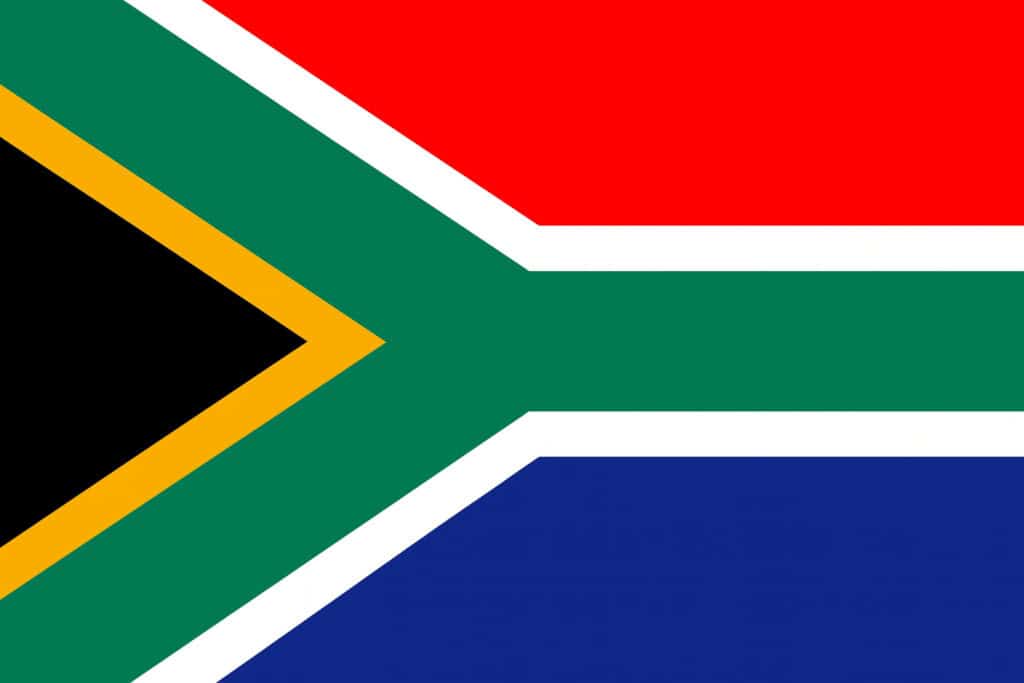
This article forms part of the Betline Licensing and Legal series and explains where gambling revenue goes in South Africa.
It shows how taxes, levies, and industry contributions are distributed, and how licensed betting supports public funding, community development, and responsible gambling.