
Why Offshore Betting Sites Are Risky for South Africans
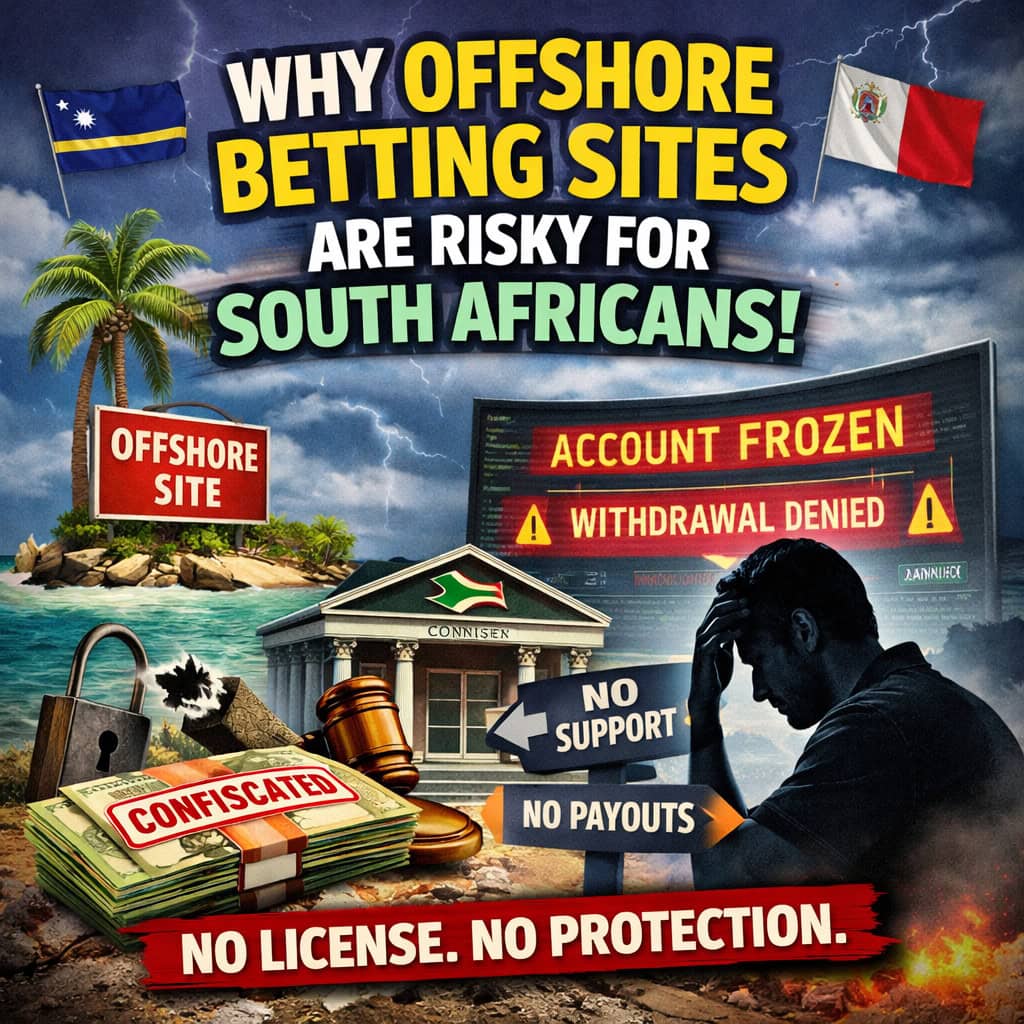
Online betting has never been more accessible in South Africa. Dozens of sites compete for local bettors with sign-up bonuses, wide sports markets, and slick apps. But not all of them are playing by the same rules, and for South African bettors, the difference matters more than most people realise.
Many of the betting sites that appear in search results or on social media are based offshore, operating under foreign licences from places like Curaçao or Malta. On the surface, they can look just like any other betting site. The real difference is what happens when something goes wrong.
The Law Is Pretty Clear About Offshore Betting Sites in South Africa
South Africa’s gambling landscape is governed by the National Gambling Act 7 of 2004. Section 11 of the Act makes interactive gambling unlawful unless it has been specifically authorised by legislation. In plain terms, this means that any betting site operating outside South Africa without a locally issued licence is not permitted to offer its services to South African bettors.
To legally accept bets from South African customers, an operator needs a bookmaker licence issued by one of the country’s provincial gambling regulators. These include authorities like the Western Cape Gambling and Racing Board, the Gauteng Gambling Board, the Mpumalanga Economic Regulator, and the KwaZulu-Natal Economic Regulator. Each board oversees the operators in its jurisdiction and enforces rules around player protection, responsible gambling, and financial compliance.
Offshore betting sites sit entirely outside this framework. Even if they hold a foreign licence, that licence carries no weight in South Africa. Bettors using these sites are, in legal terms, betting with an operator that has no authorisation to serve the local market.
🎁 Claim Your Welcome Betting Bonus Today
Explore a tailored list of the best betting bonuses in South Africa. Find a verified local site to bet on and start with extra value right now.
View Bonuses & Bet Safely →What Happens When There Is a Dispute
One of the most practical risks of using an offshore betting site is that there is very little recourse if something goes wrong.
With a locally licensed operator, bettors can submit a complaint to the relevant provincial gambling board. Regulators have the authority to investigate and compel operators to resolve legitimate disputes. It is not a perfect system, but it gives bettors a meaningful option.
With offshore betting sites, that option does not exist. If an offshore operator delays a withdrawal, suspends an account without explanation, or changes bonus terms after the fact, there is no South African authority with the jurisdiction to step in. Bettors are left relying entirely on the internal policies of the operator itself, which may offer very little in the way of real protection.
Your Winnings Could Be Confiscated
This is perhaps the most overlooked risk, and one that catches many bettors off guard.
The Internet Service Providers’ Association of South Africa (ISPA) has specifically warned South Africans about the financial dangers of using betting sites that are not licensed locally. According to ISPA, offshore gambling websites operate outside South Africa’s regulatory system, and South African banks may be legally obligated to confiscate winnings linked to illegal gambling transactions.
What this means in practice is that even a successful withdrawal from an offshore betting site does not guarantee that the money actually reaches you. Once those funds pass through the South African banking system, they can be flagged or frozen.
The layers of financial risk stack up quickly. The offshore operator may delay or refuse the withdrawal in the first place. Payment processors may block gambling-related transactions. And even if the money gets through those stages, local banks may still act on it. ISPA chair Sasha Booth-Beharilal has described the use of unlicensed gambling websites as extremely reckless for South African consumers and has encouraged bettors to keep their activity within the locally regulated market.
Fairness Is Not Guaranteed Offshore
Beyond the legal and financial risks, there is also the question of whether the betting environment itself is fair.
Licensed South African betting operators are required to meet strict compliance standards enforced by provincial gambling boards. These standards exist to ensure that betting markets operate transparently and that bettors are treated fairly.
Offshore operators are not subject to those same requirements. Without local regulatory oversight, there are fewer guarantees about how odds are set, how accounts are managed, or how disputes are handled. ISPA has noted that gambling already carries significant financial risk for South Africans, with billions of rand spent on betting each year. Placing bets on unregulated offshore sites adds an unnecessary layer of uncertainty on top of that.
Why Blocking These Sites Is Harder Than It Sounds
You might wonder why offshore betting sites are still accessible if they are effectively illegal for South African bettors. The answer comes down to the practical limitations of internet regulation.
According to ISPA, South African law limits the ability of internet service providers to monitor or intercept user traffic, which means ISPs cannot simply track what websites people visit in order to block offshore betting sites. Basic domain blocking is relatively cheap to implement but easy for users to get around. More advanced methods like deep packet inspection can be more effective but raise serious concerns about user privacy, cost, and network performance.
For this reason, regulators and industry bodies tend to focus on consumer awareness rather than purely technical solutions. The responsibility ultimately falls on bettors to make informed decisions about where they choose to bet.
Why Licensed Betting Sites Are the Safer Choice
Betting sites that hold a valid South African bookmaker licence operate under a set of requirements that are specifically designed to protect bettors. These include identity verification procedures, responsible gambling tools, financial compliance monitoring, and formal dispute resolution processes.
These are not just box-ticking exercises. They represent the baseline standards that a licensed operator must meet to stay in good standing with the regulator. If an operator falls short, the regulator has the authority to act.
The National Gambling Board has consistently emphasised that operators must function strictly within the parameters of their licensed activities. That structure exists for a reason. When bettors use locally licensed sites, they are dealing with an operator that is accountable under South African law.
A Note on How South African Gambling Is Structured
It is worth understanding that South Africa’s gambling policy deliberately separates different types of gambling into distinct regulated categories. Casinos, betting operators, limited payout machines, and bingo each fall under their own licensing structure and are regulated accordingly.
This means that a betting site cannot simply obtain any gambling licence and call it sufficient. Operators serving South African bettors need the specific bookmaker licence that covers fixed-odds betting. Offshore sites, regardless of what foreign licence they may hold, do not meet this requirement.
Think Before You Click
Offshore betting sites often look appealing. The bonuses can be large, the markets wide, and the sign-up process simple. But the risks that come with using them are real and, in some cases, severe.
Without a South African bookmaker licence, these operators have no legal standing to serve local bettors. Without local regulation, bettors have no meaningful consumer protection. And as ISPA has warned, the financial consequences can extend beyond the betting site itself, reaching into the banking system in ways most bettors would not expect.
For South African bettors, the sensible approach is to stick with locally licensed betting sites. They may not always offer the flashiest bonuses, but they operate within a framework that is designed to protect the people using them. That is worth more than any welcome offer.
Offshore betting sites South Africa FAQs
Clear answers on the risks of using offshore betting sites, why local licensing matters, and how South African bettors can protect themselves.
What is an offshore betting site?
Are offshore betting sites legal in South Africa?
Why are offshore betting sites risky for South Africans?
Can South African banks confiscate winnings from offshore betting sites?
What happens if an offshore betting site refuses to pay out?
How can I tell if a betting site is licensed in South Africa?
Why is a local bookmaker licence important?
Why are locally licensed betting sites safer?
This article was prepared by Betline South Africa as part of our Licensing and Legal series, which covers how gambling laws and licensing structures work in South Africa.
The risks discussed here, including financial exposure and the lack of consumer protection when using offshore betting sites, are intended to inform South African bettors making decisions about where to place their bets.